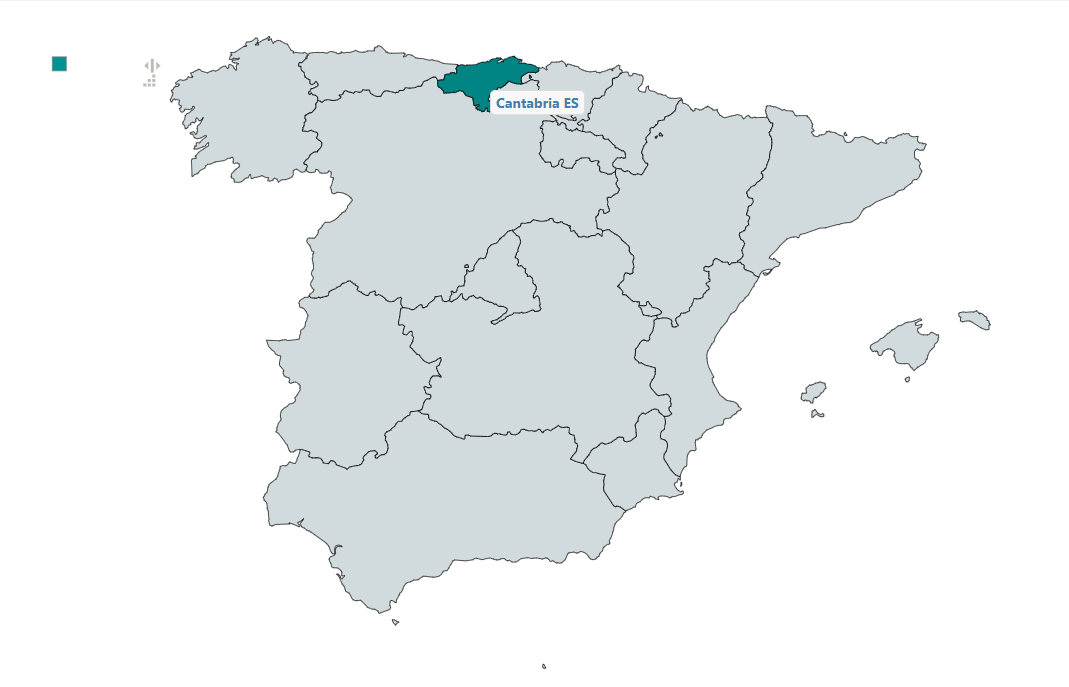
Cantabria – Renaturalization of Dr. Diego Madrazo Avenue
Photo from Ayuntamiento de Santander
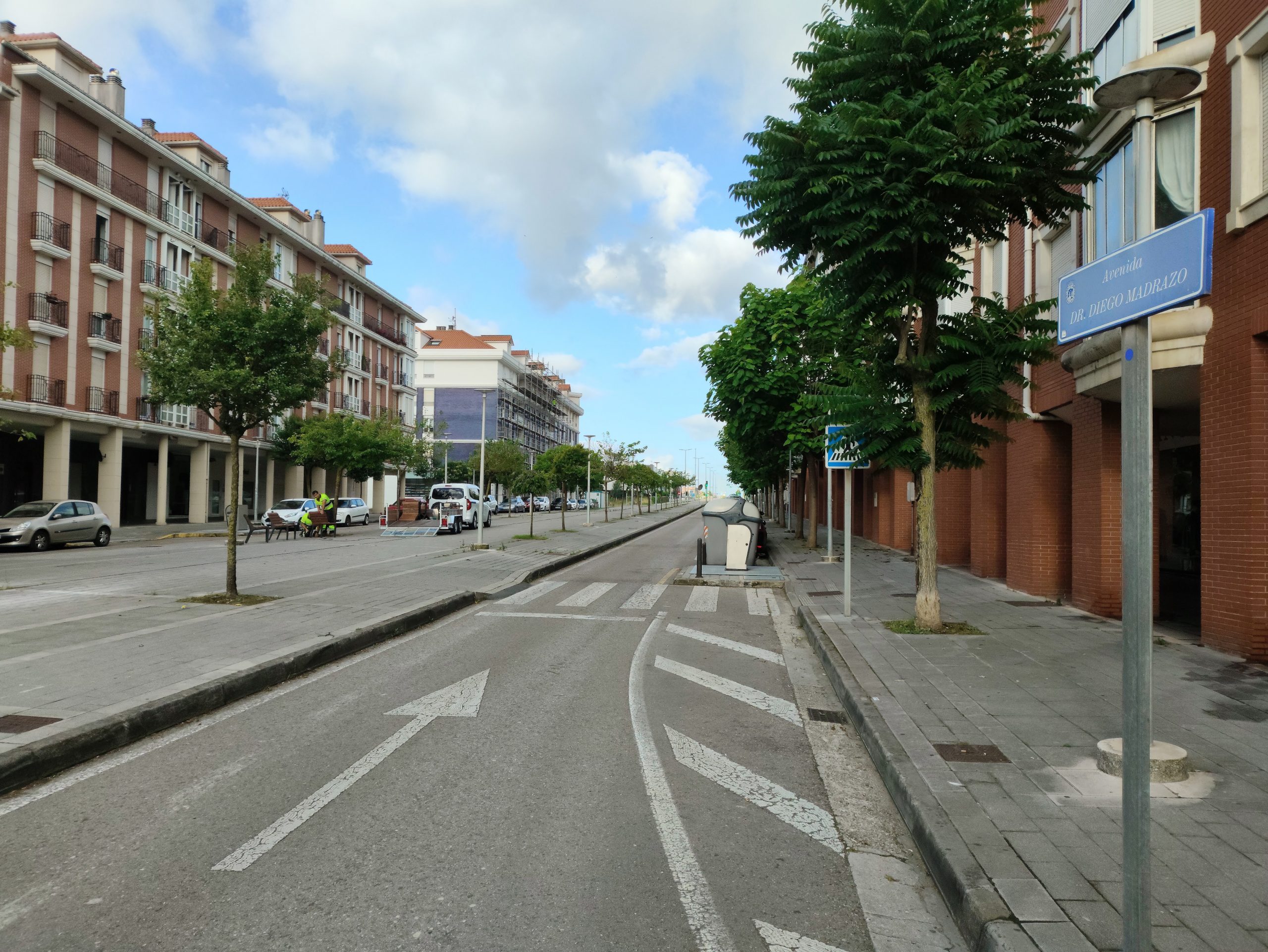
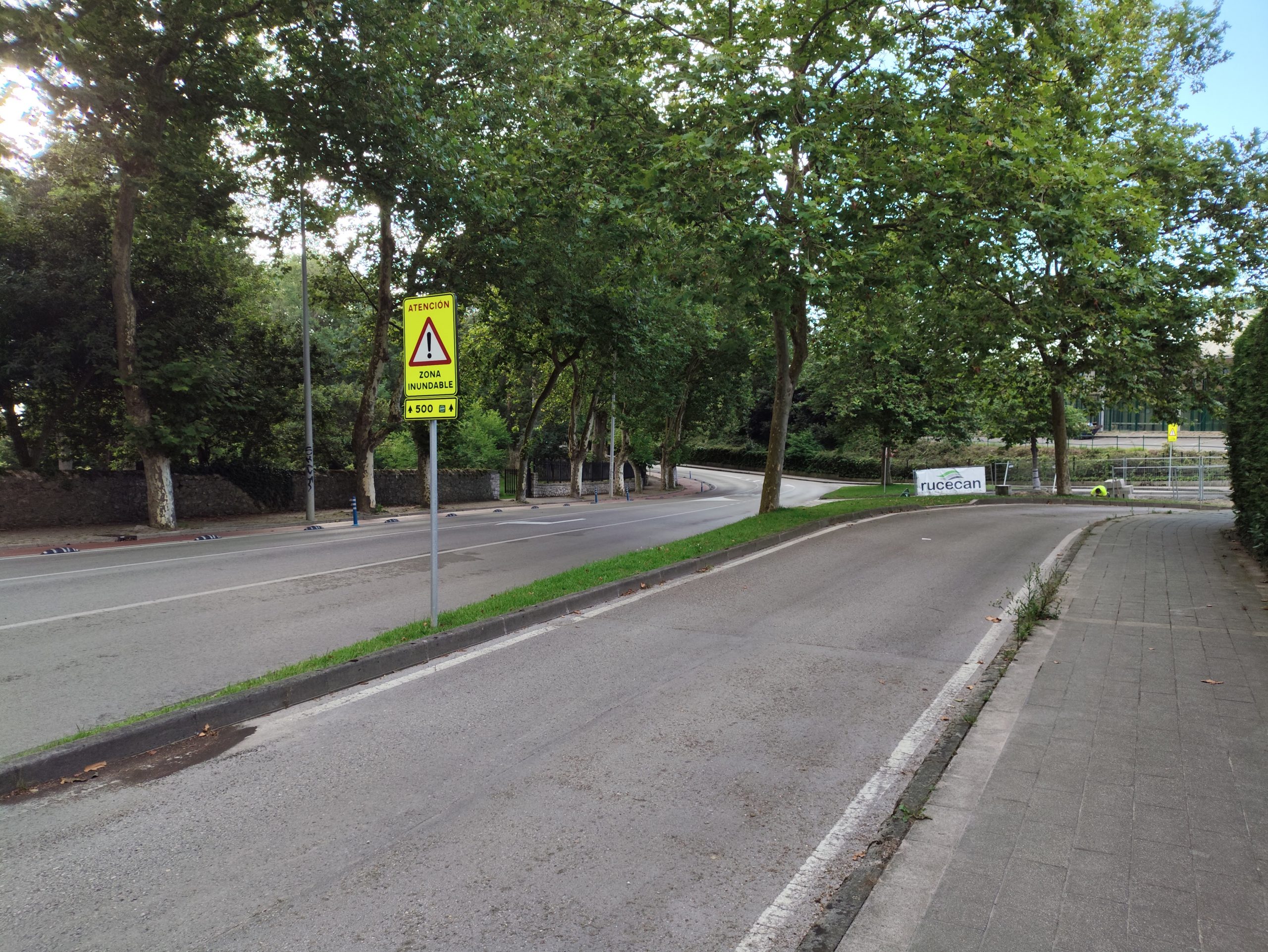
Dr. Diego Madrazo Avenue
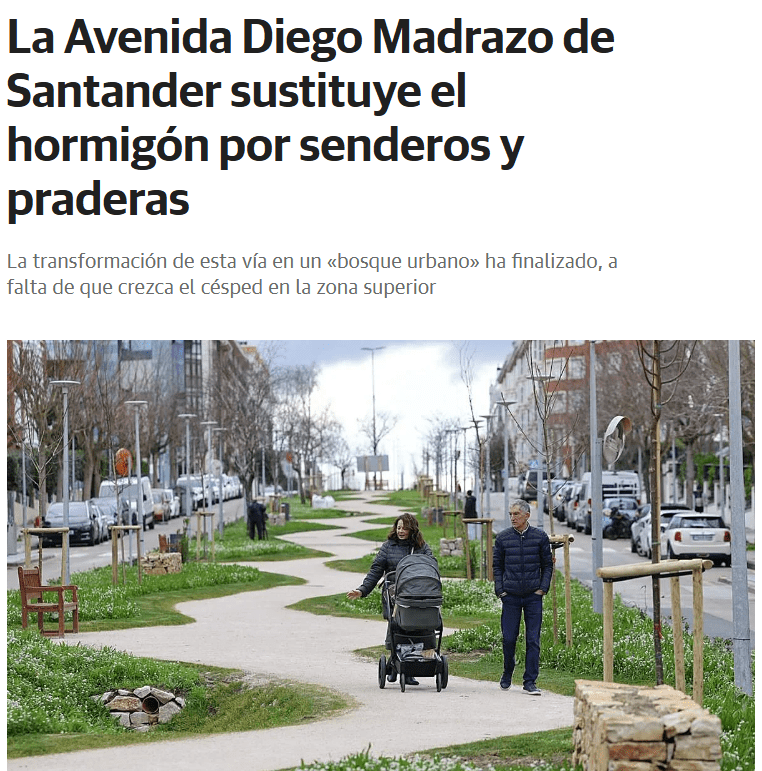
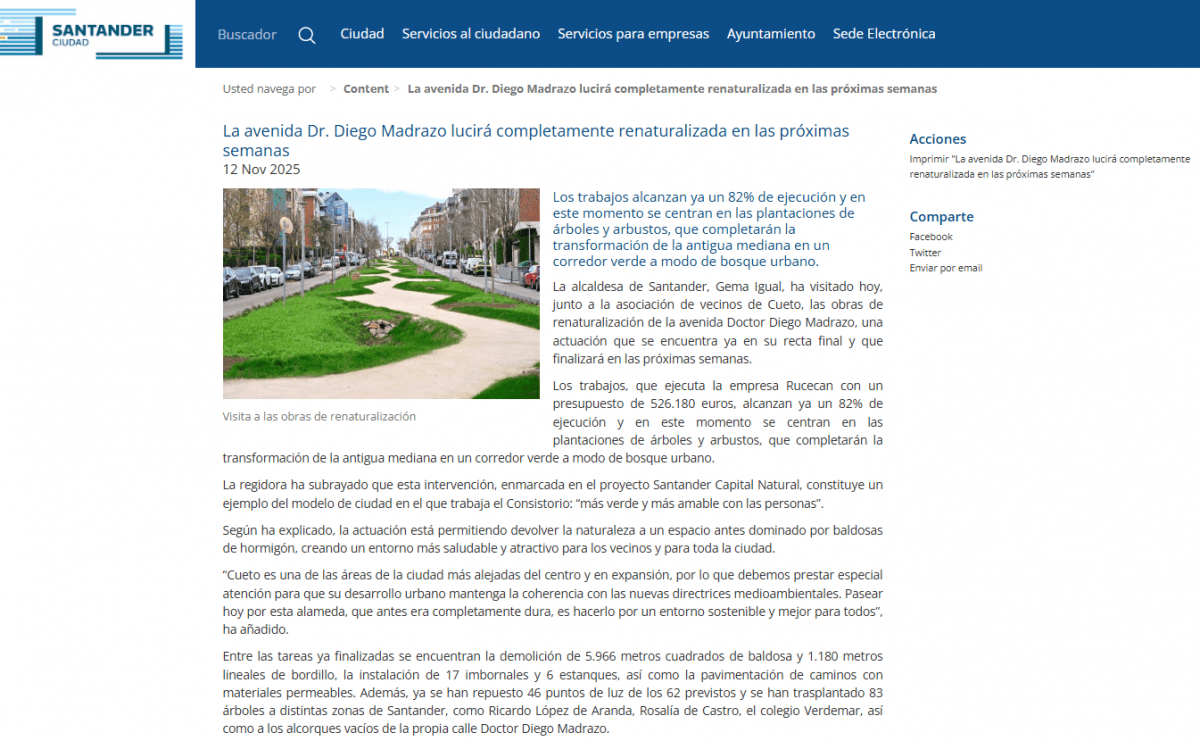
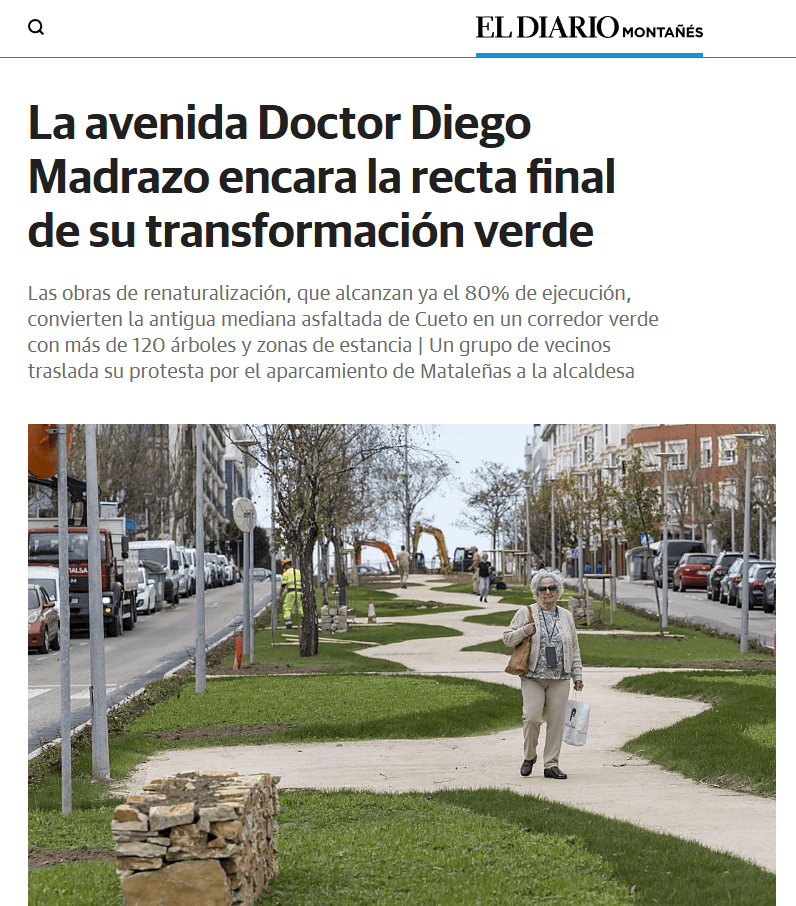
The demonstrator pilot “Renaturalization of Dr. Diego Madrazo Avenue, Santander” is part of the broader initiative “Santander Capital Natural”, aimed at the renaturalization of urban areas and the restoration of existing natural assets in the city of Santander. It focuses on adapting urban infrastructure to the impacts of climate change by enhancing its capacity to withstand extreme weather events through nature-based solutions. The intervention includes the sustainable redesign of the avenue, improved urban drainage systems, the creation of climate-resilient green spaces, and the recovery of public spaces for community use. These actions promote a healthier, more inclusive urban environment and contribute to the city’s ecological transition. Ultimately, the project reinforces Santander’s commitment to sustainability, climate adaptation, and environmental resilience.
Type of Landscape: Coastal & Urban
Ecosystem : Urban Ecosystem
Introduction
The pilot project aims to renaturalize urban spaces and restore nature in the city of Santander, focusing on transforming a highly paved, heat- and flood-prone avenue into a climate-resilient, biodiverse corridor.
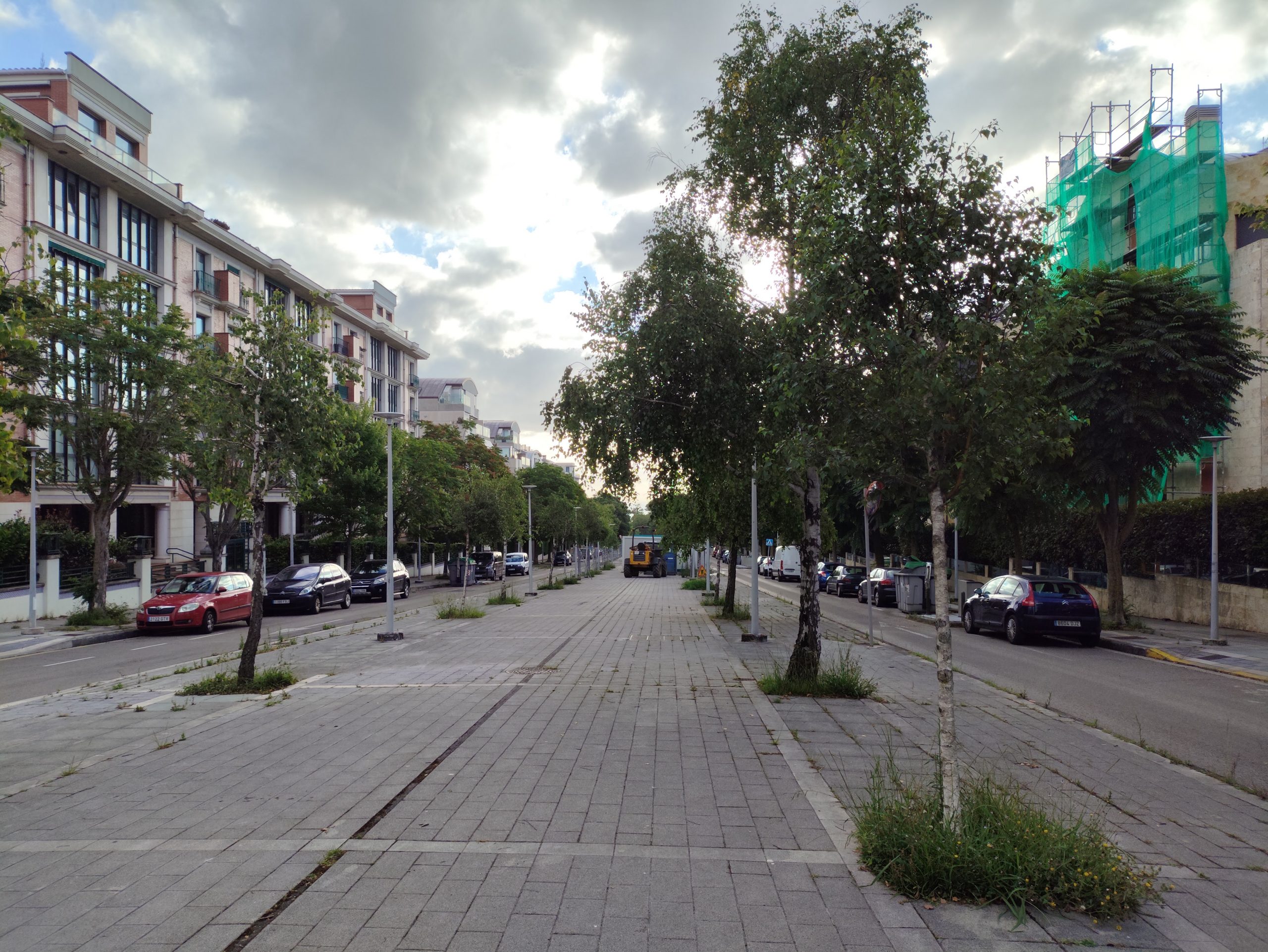
Currently, the Avenue consists mainly of impermeable surfaces with limited vegetation and undersized trees, which offer little shade or ecological value. The street slopes towards Faro Avenue and Parque de Mataleñas, causing pluvial flooding during heavy rainfall events.
The intervention includes replacing paved surfaces with permeable, green areas, planting a diverse selection of native trees and shrubs, and improving soil conditions to support healthy vegetation growth. These measures aim to reduce urban heat stress, enhance biodiversity, and manage stormwater through natural infiltration.
This transformation will benefit multiple community systems by reducing flood risk, improving thermal comfort, increasing urban biodiversity, and creating a more attractive and healthier environment for residents and visitors.
The pilot is co-implemented by the Santander City Council, local NGOs, research institutions, and community stakeholders, and will serve as a reference for climate adaptation strategies across the city.
Specific NbS tailored for Cantabria Region
Key climate vulnerabilities of the region are addressed by the pilot: pluvial flooding and urban heat stress through a set of targeted Nature-Based Solutions (NbS) that enhance climate resilience, ecological value, and urban liveability.
To mitigate pluvial flooding, permeable green surfaces will replace existing paved areas, allowing for increased rainwater infiltration and reducing surface runoff. This directly strengthens the water management system and protects critical infrastructure, such as nearby roads that frequently flood during heavy rainfall events.
To address urban heat stress, a diverse selection of trees and shrubs will be planted along the Avenue, with sufficient root space to ensure healthy growth and canopy development. These vegetated areas will contribute to microclimate regulation, reducing surface and air temperatures during heatwaves, and enhancing health and wellbeing for residents.
The NbS applied also support urban biodiversity, by introducing native and adapted plant species, contributing to ecosystem restoration and providing habitats for pollinators and birds. This benefits the ecological system and supports pollination services in the urban environment.
Additionally, the transformation of the Avenue enhances the aesthetic value and usability of public space, creating a greener, cooler, and more inclusive environment for both citizens and tourists.
Eventually, the NbS strategy integrates vegetation-based solutions to reduce climate risks and reinforce the resilience of interconnected Key Community Systems: water management, critical infrastructure, ecological system, and health & wellbeing.
Key Concepts
Several key concepts from climate adaptation, urban planning, and ecological restoration are integrated in the pilot:
Environmental Challenges
The pilot addresses two pressing environmental challenges in the city of Santander: pluvial flooding and urban heat stress.
The Avenue, currently dominated by impervious surfaces and limited vegetation, contributes to excessive surface runoff during heavy rainfall events. This frequently leads to localised flooding, particularly in lower-lying areas such as Faro Avenue (road to the lighthouse and therefore a touristic route). The lack of vegetation also limits evapotranspiration and shading, contributing to the urban heat island effect, which impacts the comfort and health of residents.
Additionally, the existing ecological condition of the Avenue is poor, with low biodiversity and minimal ecosystem services. The current landscape provides little habitat for wildlife and does not support pollination or natural cooling functions.
The pilot responds to these challenges by implementing nature-based solutions (NbS) that increase green cover, restore ecological function, and improve soil permeability. These measures aim to reduce runoff, lower ambient temperatures, and enhance the resilience of urban infrastructure and ecosystems under changing climate conditions.
Policy Support
The pilot is supported by several local and regional policy frameworks that align with climate adaptation, urban resilience, and biodiversity goals.
At the municipal level, the pilot is embedded in the Santander Capital Natural project, which promotes the renaturalisation of urban spaces and the integration of nature-based solutions (NbS) into city planning. The Urban Adaptation Plan, coordinated by the Santander City Council and supported by the Foundation for Climate Research (FIC), provides the strategic framework for implementing climate resilience actions in urban infrastructure.
The University of Cantabria supports policy development through research that informs updates to the city’s Biodiversity Strategy and contributes to the design of climate-resilient infrastructure.
In addition, the project aligns with broader national and EU environmental and climate adaptation policies, including the EU Strategy on Adaptation to Climate Change and the EU Biodiversity Strategy for 2030. These frameworks encourage local authorities to implement NbS to address climate risks such as flooding and heat stress, while delivering co-benefits for ecosystems and urban populations. In fact, this renaturalization project has been funded by the European Union through the NextGenerationEU programme.
The pilot demonstrates strong institutional support and policy alignment, enabling effective implementation and future upscaling within the city and beyond.
Stakeholders
A diverse group of stakeholders from local government, academia, civil society, and the local community has been involved in the pilot:
This collaborative, multi-actor governance structure supports a co-design process aligned with climate resilience goals and community needs.
Key Community systems
Expected impact of NBRACER
The NBRACER project provides crucial scientific, technical, and community engagement support to the Dr. Diego Madrazo Avenue pilot, accelerating its transformation into a climate-resilient, green, and multifunctional urban space. Through NBRACER’s integrated framework and tools, the pilot benefits from cutting-edge nature-based solutions (NbS) approaches, innovative design concepts, and participatory processes that enhance local capacity to manage climate risks such as flooding and heat stress. The project’s knowledge exchange network also fosters collaboration among stakeholders, ensuring that the pilot’s implementation aligns with broader regional adaptation goals.
Conversely, the Dr. Diego Madrazo Avenue pilot serves as a key demonstrator within NBRACER, providing a practical and replicable example of NbS applied in a coastal urban context. The lessons learned, monitoring data, and community feedback generated by this pilot contribute directly to NBRACER’s validation and refinement of NbS solutions. The pilot’s success supports the project’s mission to mainstream NbS across European Atlantic regions and informs policy recommendations and adaptation pathways at multiple governance levels.
Together, the synergy between NBRACER and the pilot ensures a two-way impact: NBRACER strengthens local resilience and NbS implementation at the pilot site, while the pilot enriches the project’s evidence base and fosters wider uptake of nature-based climate adaptation strategies. Within the initial scope of the NBRACER framework, the degree of impact of Nature-Based Solutions (NBS) will be analysed to predict the level of future benefits, by making use of data that will be collected through newly installed sensors and developed models.
Related News