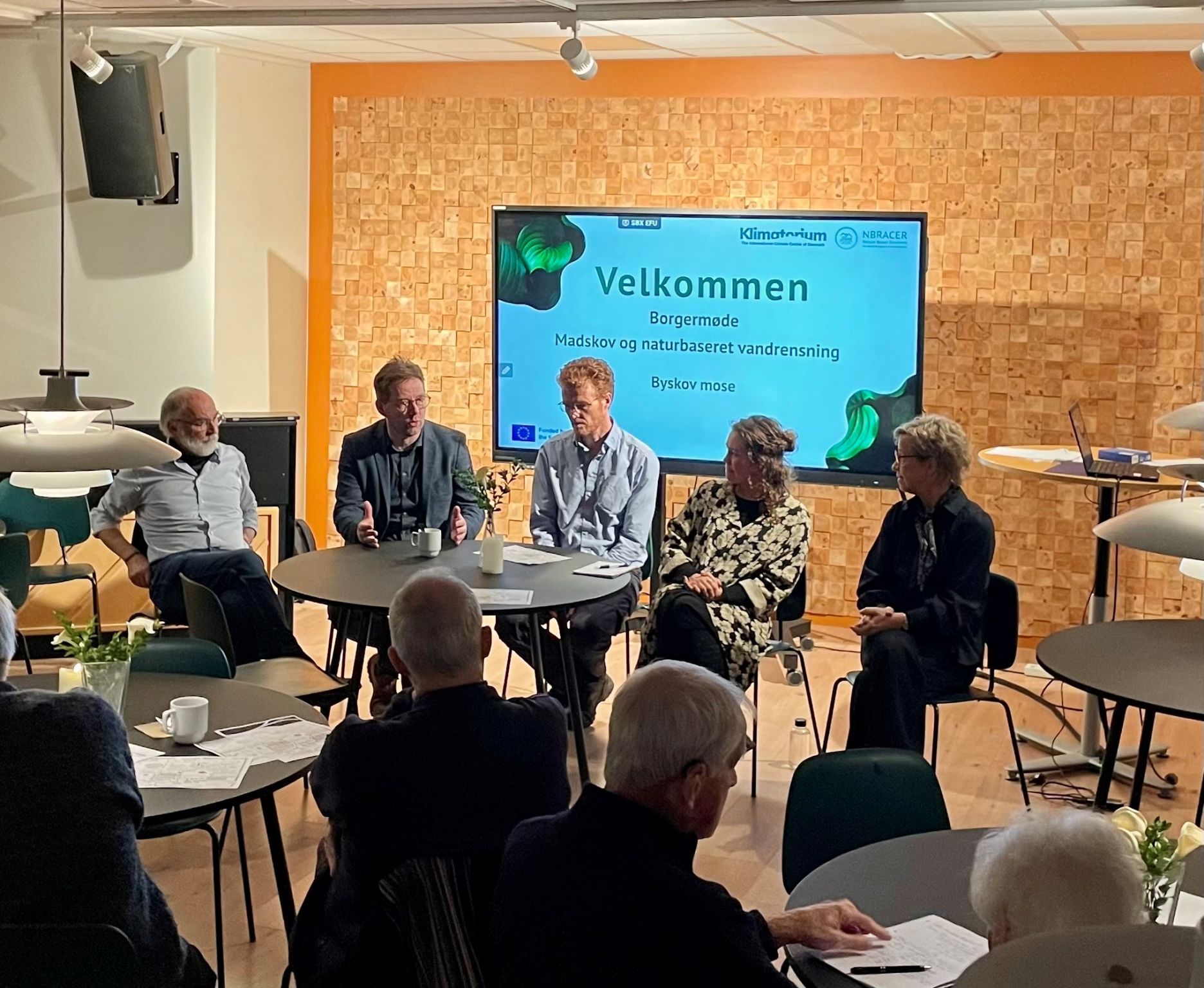
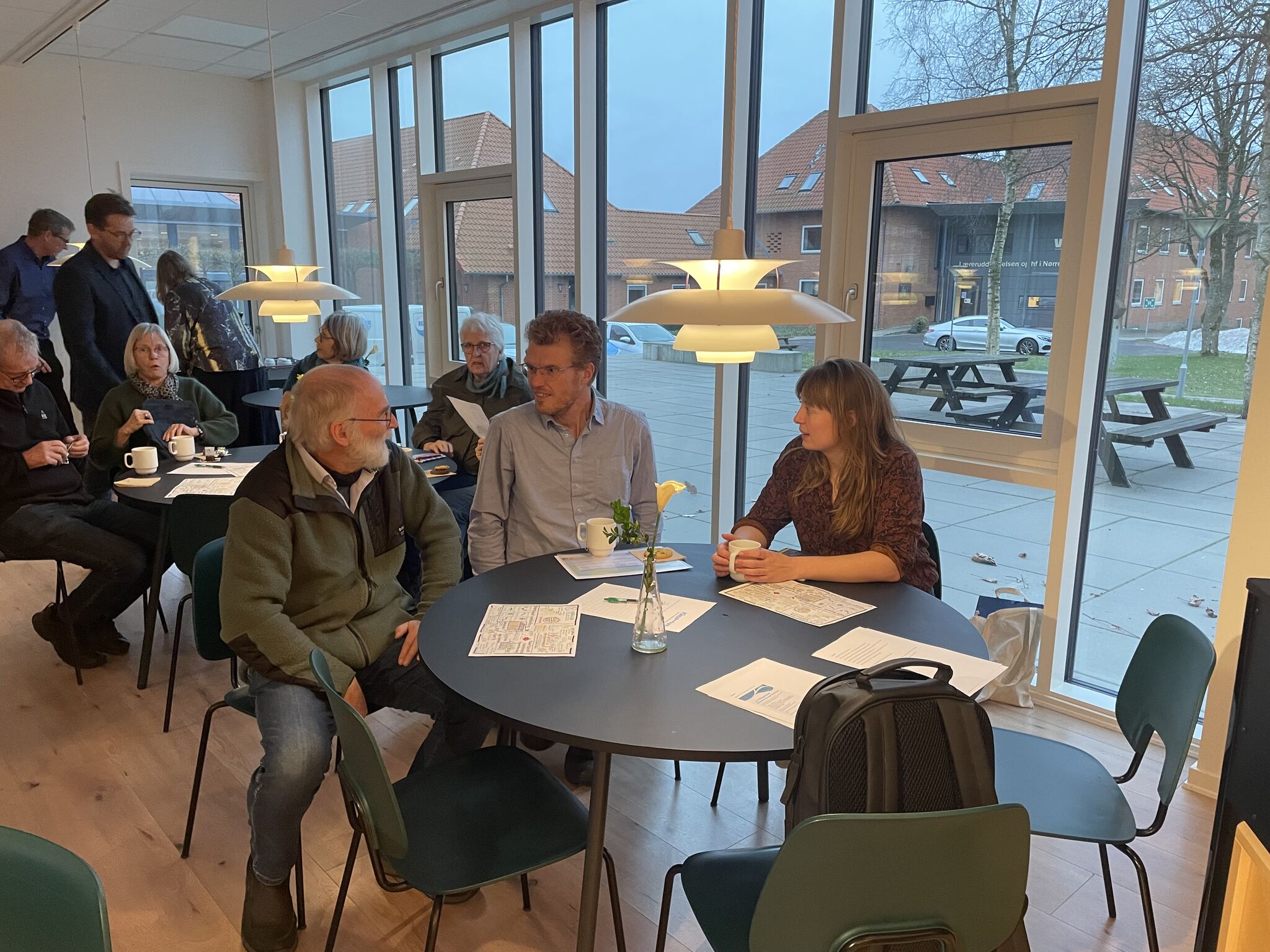
A well-attended citizens’ meeting in Nr. Nissum brought together local residents, professionals and project partners to discuss the development of a food forest and nature-based water purification system in Byskov Mose. The event formed part of activities under the NBRACER project and highlighted strong local engagement around multifunctional landscape solutions.
Participants expressed broad interest in approaches that enhance biodiversity, recreational opportunities and sustainable water management for the future.
Addressing water challenges through nature
A central theme of the meeting was how nature-based solutions can help manage extraneous water entering wastewater systems — an increasing pressure on existing infrastructure. Landscape-based approaches such as planted filter systems, natural water retention and biological purification were discussed as ways to reduce the burden on sewer networks while also limiting the need for costly grey infrastructure expansion.
The planned experimental planted filter system in Byskov Mose was presented as a concrete example of decentralised, landscape-integrated water management. The system aims to relieve traditional wastewater infrastructure while maintaining high standards for water quality and treatment performance.
Food forests as multifunctional landscapes
The concept of Madskov (food forest) was introduced as a complementary, multifunctional land-use model. Beyond water management, food forests can help improve nutrient-poor soils, create habitats for plants and animals, and provide recreational and educational value. By combining nature restoration, food production and community use, these systems support more resilient and diverse landscapes.
Active citizen involvement was highlighted as a key element, strengthening local ownership, understanding and long-term stewardship of nature-based solutions.
Contributing to broader ambitions
Experiences from Byskov Mose also connect to wider national ambitions around new forest establishment and green transition strategies. The discussions demonstrated how multifunctional approaches can simultaneously support biodiversity, climate adaptation, recreation and sustainable water management.
Looking ahead
Next steps include continued dialogue and closer collaboration with local citizens interested in participating in and following the development of the Byskov Mose initiatives. Local knowledge and engagement remain central to the process.
The strong attendance, thoughtful questions and constructive debate at the meeting provide a solid foundation for the next phase of work within NBRACER’s activities in the area.
For press inquiries, contact natalia.brack@iid-sii.org or jessica.bailloux@iid-sii.org