A field trial carried out by Inagro at the farm of Hendrik Vandamme in Ostend has shown that non-tillage farming can also be successfully applied in polder soils. The trial with sugar beets delivered promising results: faster crop emergence, comparable yields, and valuable practical insights for fellow growers.
Trial setup
The trial was established this year on a 2.8-hectare field at Hendrik Vandamme’s farm.
After the wheat harvest in 2024, a cover crop mixture of yellow mustard, oilseed radish, phacelia and Japanese oats was sown. At the end of October, the cover crop was mulched. Part of the field was ploughed before winter, while approximately 0.5 hectares were managed using non-tillage farming practices.
The non-tillage section was opened up under frost conditions on 15 February. On 15 March, the field was cultivated using a traditional polder harrow, while manure was applied through a drag hose system. The field was prepared for sowing on 20 March, after which the sugar beets were planted.
Faster emergence, similar sugar yield
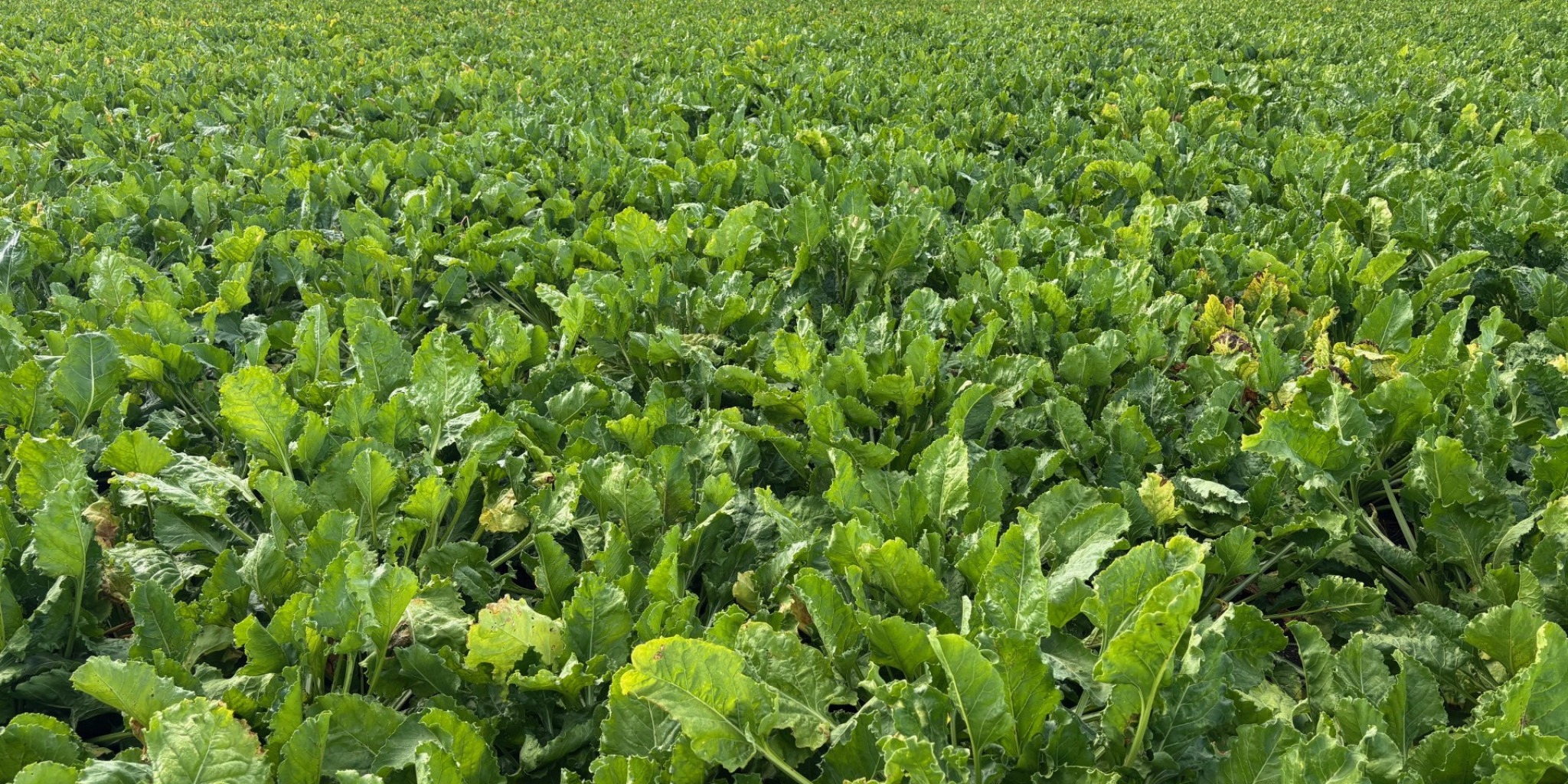
In the non-ploughed section, the sugar beets showed faster and more uniform emergence. This difference was visible in the field and was also confirmed through emergence counts.
On 4 and 18 August, yield and sugar content measurements were carried out. The sugar content was slightly lower in the non-ploughed section, but the root yield was higher. This resulted in a total sugar yield per hectare that was approximately equal between the ploughed and non-tillage sections.
Higher soil moisture levels in the non-tillage section
Soil moisture sensors measured moisture levels at a depth of 20 cm. The results showed that soil moisture was slightly higher in the non-tillage section.
Given the dry spring conditions, this higher moisture availability likely contributed to the better emergence of the sugar beet crop in this part of the field.
Hendrik Vandamme also shares his own observations from the field in an accompanying video.
Practical advice for growers
Based on his experience, Hendrik provides practical tips for other polder farmers interested in applying non-tillage farming. His observations highlight the importance of adapting cultivation practices to local soil conditions.
To support growers who want to explore this approach, Inagro will organise a webinar on 2 December about non-tillage farming in the polder.
More information in Dutch here
https://inagro.be/nieuws/onderzoek-de-polder-toont-aan-niet-kerende-bodembewerking-maakt-verschil