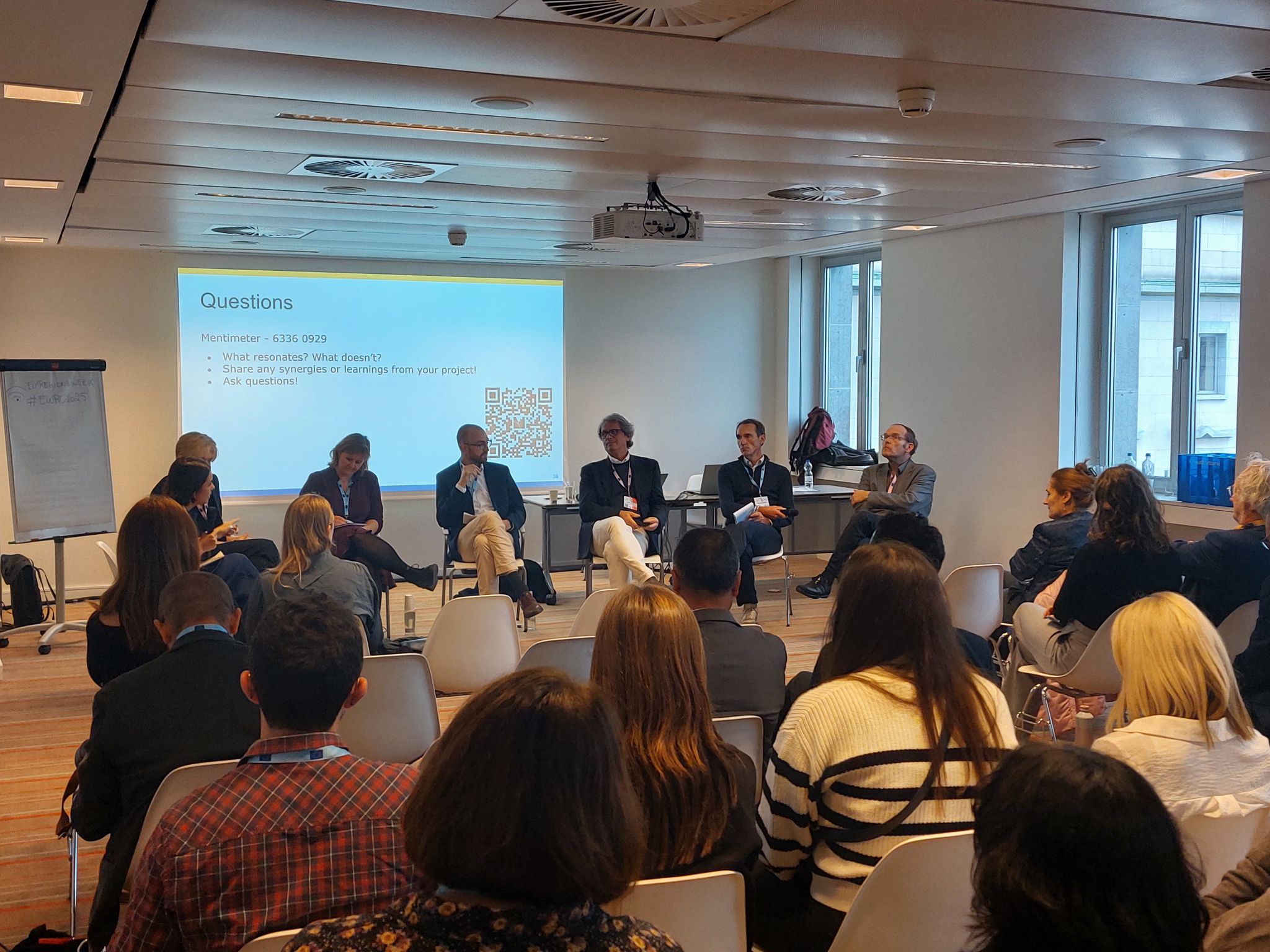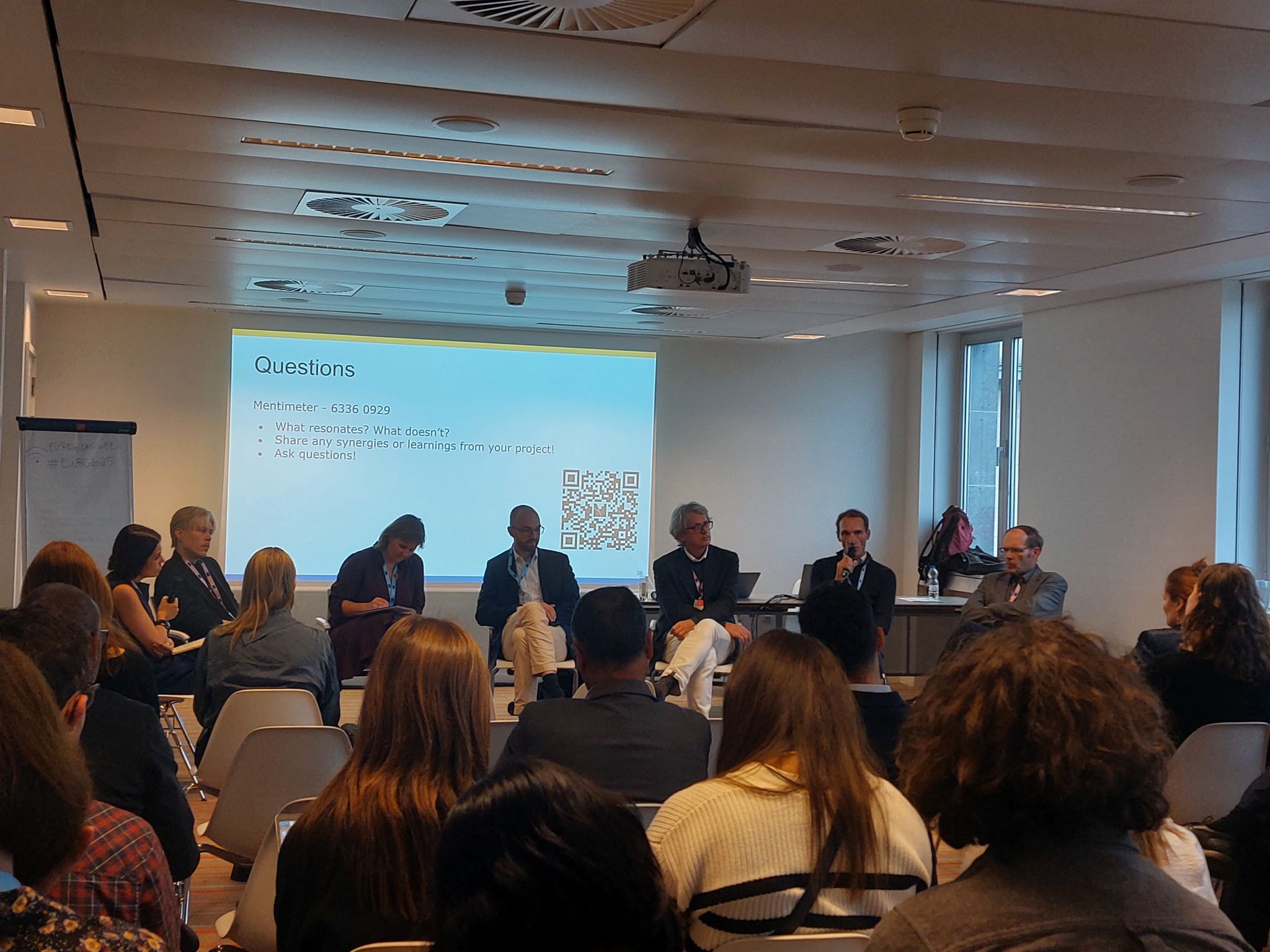
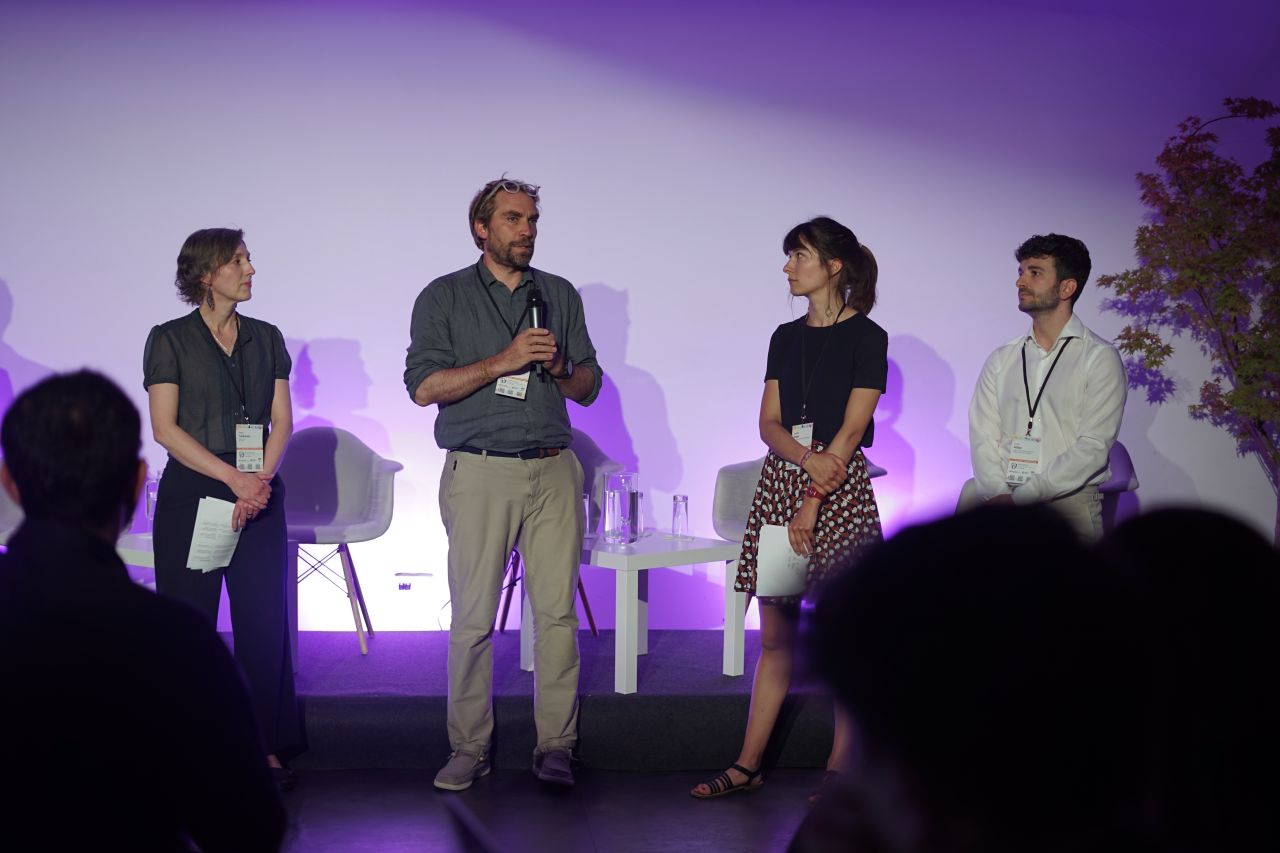
From 17–19 June 2026, NBRACER contributed to the 13th European Urban Resilience Forum, held in Guimarães, Portugal. The event brought together cities, regions, researchers, practitioners, European projects and policy actors to exchange on climate adaptation, disaster risk management and urban resilience.
As a project working to support climate resilience across Europe’s Atlantic regions through Nature-based Solutions, NBRACER joined several discussions focused on regional adaptation pathways, water resilience, healthy soils, landscape-scale planning and the practical implementation of Nature-based Solutions.
Connecting regional experience with European climate resilience discussions
EURESFO 2026 provided an important opportunity for NBRACER to share insights from its regional work and to connect with other initiatives addressing climate risks across Europe.
Throughout the forum, NBRACER contributed to exchanges on how regions can move from climate-risk awareness to concrete implementation, and how Nature-based Solutions can support adaptation in diverse territorial contexts. Discussions also explored the importance of governance, stakeholder engagement, monitoring, financing and cross-regional learning in turning adaptation strategies into practical action.
NBRACER was represented in sessions including:
- “Regional climate resilience and adaptation pathways: lessons learnt and policy insights from on-the-ground experience”
- “Greener regions, real impact: Beyond the buzzword to make Nature-based Solutions work”
These sessions created space to discuss the challenges and opportunities of implementing climate adaptation measures across regions, with a focus on moving beyond isolated pilot actions and towards long-term, scalable and locally grounded solutions.
Regional climate resilience and adaptation pathways
The session “Regional climate resilience and adaptation pathways: lessons learnt and policy insights from on-the-ground experience” focused on how regions are designing and implementing adaptation pathways in response to climate risks.
For NBRACER, this discussion was closely connected to the project’s work with regional demonstrators, where Nature-based Solutions are being explored, tested and evaluated in response to local and regional adaptation needs.
The session highlighted the importance of translating climate adaptation strategies into practical action, while recognising that each region faces its own environmental, governance and socio-economic conditions. It also underlined the need for shared learning between projects and regions, particularly when addressing complex challenges such as water management, land-use planning, biodiversity loss and climate-related hazards.
Making Nature-based Solutions work at regional scale
NBRACER also contributed to wider exchanges on how to make Nature-based Solutions work beyond the level of concepts, strategies or individual pilot sites.
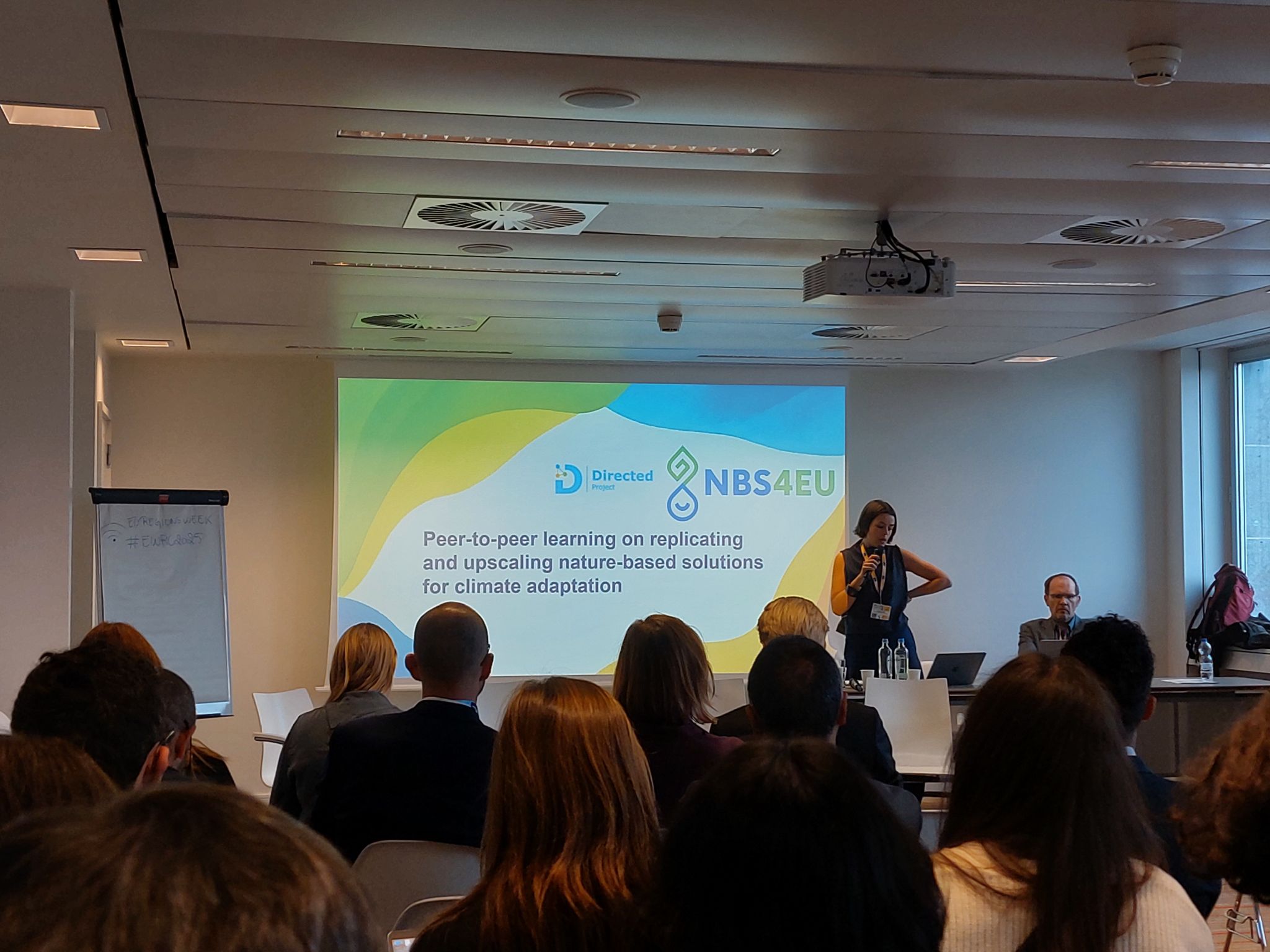
The “Greener regions, real impact” session, co-organised by the NBS4EU Network, used a World Café format to support interactive discussions between projects, regions and practitioners. The session explored how Nature-based Solutions can be designed, implemented and scaled in ways that respond to real territorial needs.
For NBRACER, this is a central question. The project works across different Atlantic regions to support the demonstration, evaluation and upscaling of Nature-based Solutions, while also strengthening knowledge exchange between municipalities, regional authorities, researchers and other stakeholders.
The session provided an opportunity to discuss common challenges faced by projects working on Nature-based Solutions, including:
- how to move from pilots to larger-scale implementation;
- how to embed Nature-based Solutions into regional and local planning;
- how to build long-term governance and financing conditions;
- how to demonstrate the benefits of Nature-based Solutions;
- how to support replication across different regional contexts.
Strengthening collaboration across the NBS4EU Cluster
EURESFO 2026 also offered an important moment for exchange between NBRACER and its sister projects within the NBS4EU Cluster, including CARDIMED, ARCADIA, DesirMED, LAND4CLIMATE, MountResilience and NATALIE.
Together, these projects are working to advance the uptake of Nature-based Solutions across Europe, supporting climate resilience in different regions, landscapes and territorial contexts.
At EURESFO, NBRACER joined cluster-level discussions on how to support large-scale implementation of Nature-based Solutions and strengthen cooperation between European projects. These exchanges are essential to avoid working in silos and to ensure that knowledge, tools and lessons learned can be shared across regions and initiatives.
As part of the wider cluster presence at the forum, CARDIMED also launched the Mediterranean Resilience Alliance, a collaborative initiative aimed at strengthening cooperation among Mediterranean regions working on climate resilience. While led by CARDIMED, the launch formed part of the broader momentum at EURESFO around inter-project collaboration and regional resilience.
Why this matters for NBRACER
NBRACER’s participation at EURESFO 2026 reflects the project’s wider objective: to support regions in developing and implementing climate resilience pathways through Nature-based Solutions.
The forum confirmed the importance of connecting scientific knowledge, regional experience and policy discussions. It also reinforced the need for practical tools, strong local engagement and cross-project collaboration to help regions move from planning to implementation.
By contributing to EURESFO 2026, NBRACER continued to share its work with a wider European resilience community, while learning from other projects, regions and initiatives facing similar adaptation challenges.
The discussions held in Guimarães will support NBRACER’s ongoing work on Nature-based Solutions, regional collaboration and the scaling of climate adaptation approaches across Europe’s Atlantic biogeographical region.
Useful links
EURESFO 2026 programme: https://urbanresilienceforum.eu/programme/sessions-2026/
Regional climate resilience and adaptation pathways session: https://urbanresilienceforum.eu/programme/sessions-2026/ws4-regional-climate-resilience-and-adaptation-pathways-lessons-learnt-and-policy-insights-from-on-the-ground-experience/
CARDIMED article on EURESFO and the Mediterranean Resilience Alliance: https://www.cardimed-project.eu/blog/events/cardimed-returns-to-euresfo-to-launch-the-mediterranean-resilience-alliance/