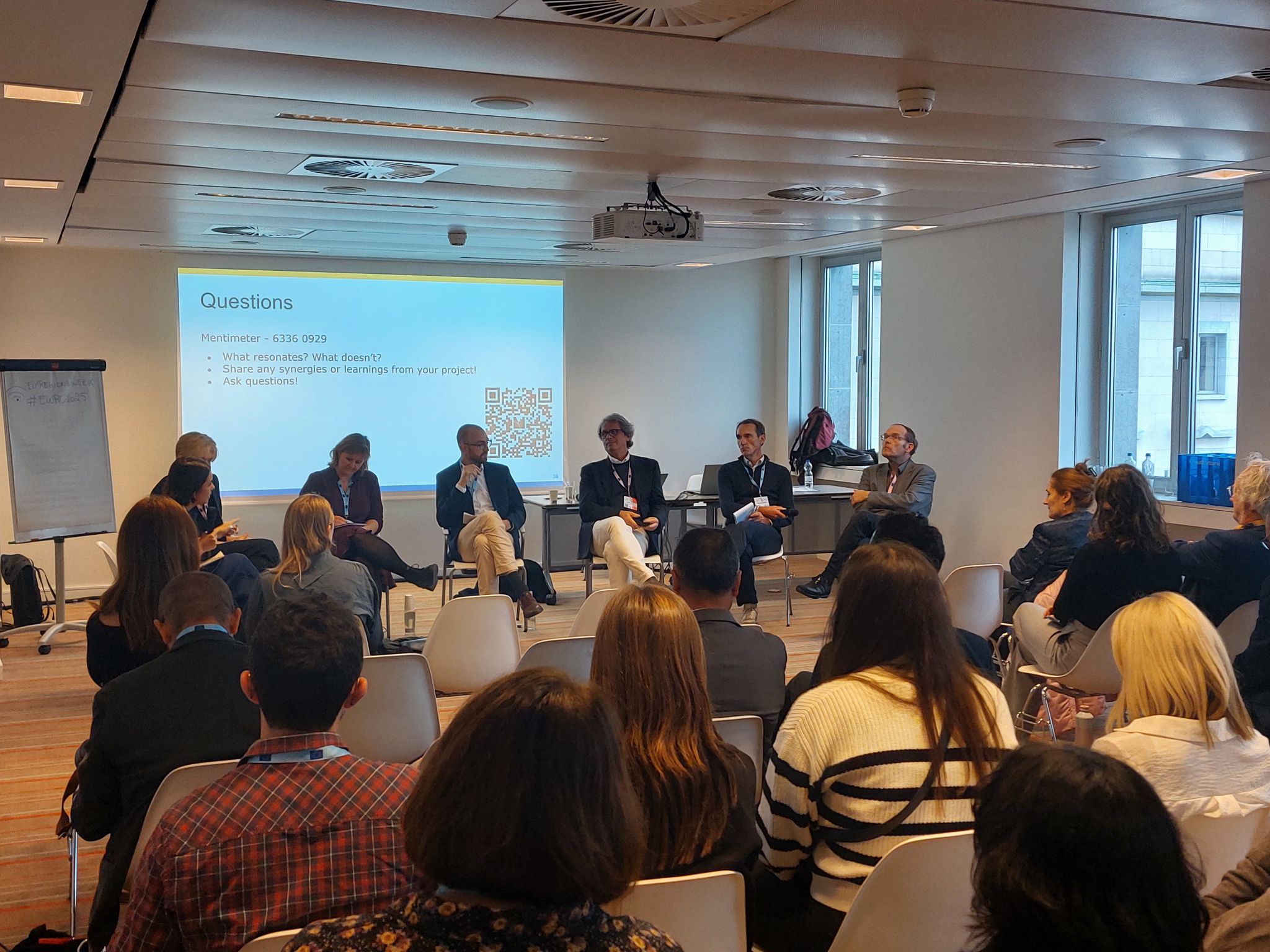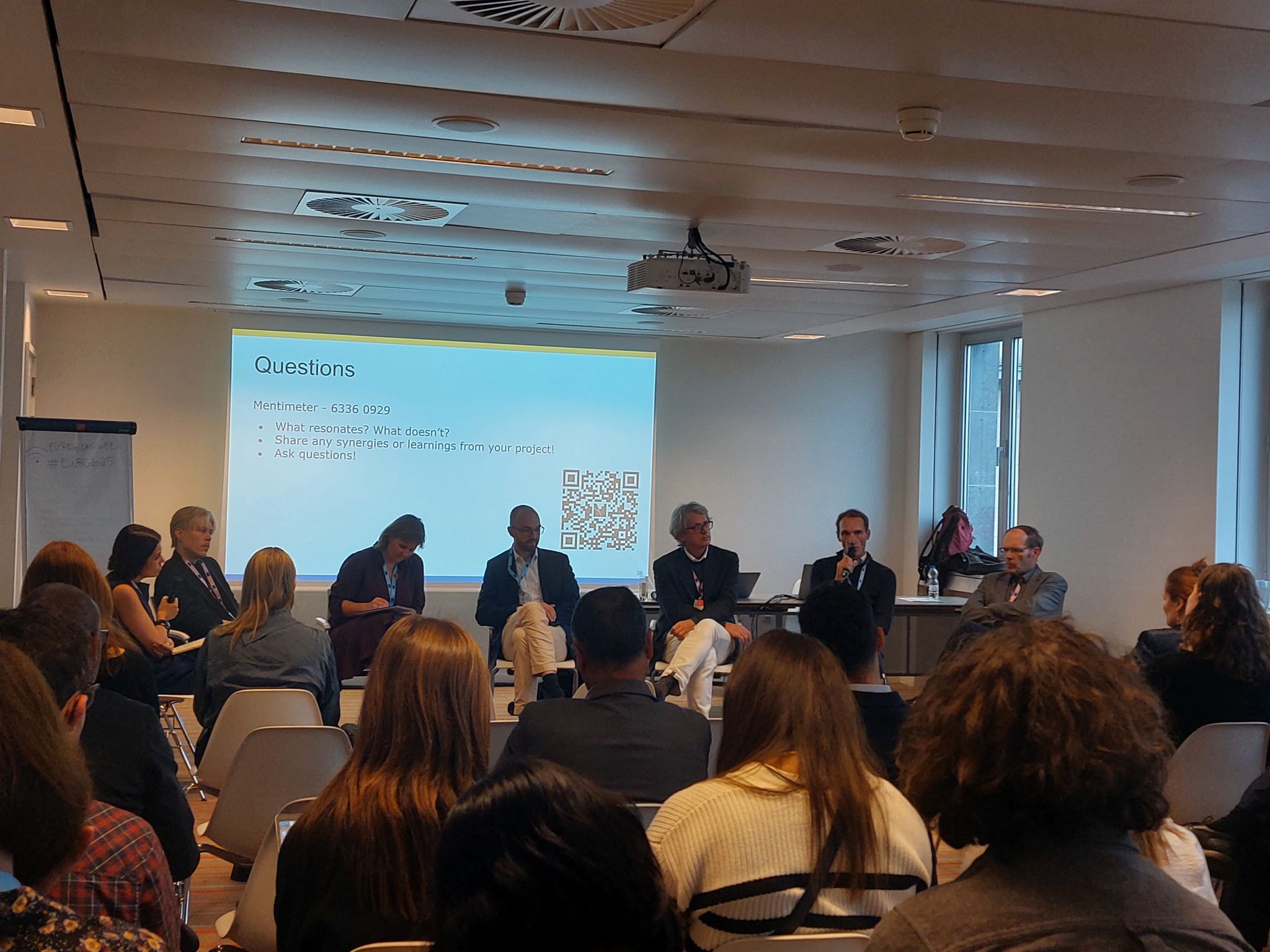
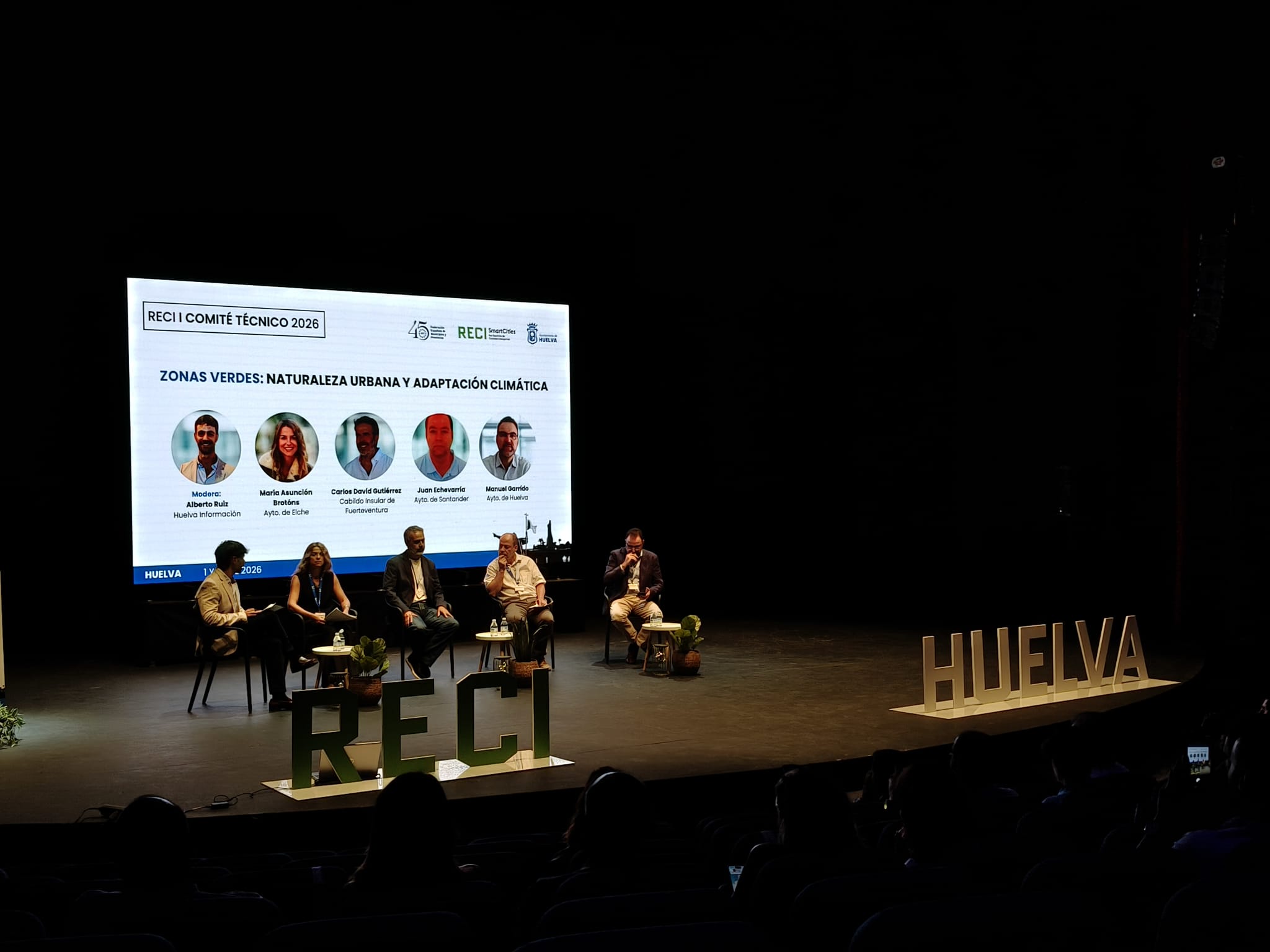
On 1–2 July 2026, Juan Echevarría Cuenca, from the Ayuntamiento de Santander, took part in the I RECI Technical Committee 2026 – Sustainable Cities: Innovation for the Environment, held in Huelva, Spain.
The event was organised by the Spanish Network of Smart Cities, RECI, and brought together experts, public administrations and stakeholders from the urban innovation ecosystem to discuss the main challenges facing the cities of the future. The programme focused on topics including Industry 5.0, urban innovation, climate neutrality, the energy transition, green energy, urban nature and climate adaptation.
Sharing Santander’s experience on urban nature and climate adaptation
Juan Echevarría contributed to the round table “Cities: Green Spaces, Urban Nature and Climate Adaptation,” where he presented Santander’s case study: “Urban Nature, Green Infrastructure and Climate Adaptation: An Integrated City Strategy” (“Naturaleza urbana, infraestructura verde y adaptación climática: una estrategia integrada de ciudad”).
The discussion brought together representatives from several Spanish cities to exchange experiences on how urban nature and green infrastructure can be integrated into local policies to address climate change, enhance biodiversity and strengthen urban resilience.
Santander’s intervention highlighted the city’s integrated approach to climate adaptation, combining strategic planning with the sustainable management of urban green infrastructure. The presentation outlined how the municipal contract for the conservation and maintenance of parks and gardens, together with the Santander Capital Natural project, funded through Spain’s Recovery, Transformation and Resilience Plan, support the city’s wider efforts on urban renaturalisation, biodiversity enhancement and the delivery of ecosystem services.
NBRACER as part of Santander’s climate adaptation strategy
Within this broader strategy, NBRACER was presented as a key initiative supporting Santander’s climate adaptation efforts.
Through collaboration with municipalities, research organisations and project partners across Europe, NBRACER supports the exchange of knowledge and practical experience around Nature-based Solutions. The project also contributes to the demonstration, evaluation and upscaling of solutions that can help cities and regions adapt to climate change while delivering wider environmental and social benefits.
In Santander, this collaborative framework strengthens the city’s capacity to implement evidence-based climate adaptation measures and supports the transfer and replication of successful approaches across different urban contexts.
From local action to wider replication
Santander’s participation in RECI 2026 offered an opportunity to share how local urban nature strategies can contribute to wider climate resilience objectives.
By presenting the city’s integrated approach, Santander highlighted the importance of connecting planning, maintenance, biodiversity, public space management and European collaboration. The intervention also showed how Nature-based Solutions can be embedded into municipal strategies and used to support healthier, more resilient and more biodiverse urban environments.
For NBRACER, the event provided another opportunity to share regional experience with a wider network of cities and public authorities working on climate adaptation, urban innovation and sustainable transformation.
Useful link
I Comité Técnico RECI 2026 – Ciudades Sostenibles: Innovación al servicio del Medio Ambiente[Add link]